Every sports management platform claims to be "all-in-one." Most aren't. Somewhere between the sales pitch and the actual product, you discover that streaming costs extra, volunteer coordination is still a spreadsheet, and onboarding means you're rebuilding your website from scratch. Before you sign a contract, run any platform through the checklist below. The questions themselves will tell you more than any feature list.
Start With What "All-in-One" Actually Means
A true sports management platform should replace your website builder, registration tool, group chat, volunteer sign-up sheet, streaming app, and accounting spreadsheet — all under one login, one price, and one support line. If a platform requires you to keep even one of those tools running alongside it, it isn't actually all-in-one. It's a bundle with gaps.
Ask any provider directly: "What will I still need a separate tool for?" The honest answer is often longer than their pitch deck.
The Onboarding Question Most Buyers Forget to Ask
The biggest hidden cost of switching platforms isn't the subscription — it's the migration. Many providers hand you a blank template and a data export file and call that "onboarding." Your staff spends weeks rebuilding a website and manually re-entering rosters before the platform is even usable.
Ask instead: does the provider build your first website for you, fully configured, before you log in? Do they migrate your existing athlete records and website content themselves, or is that your team's job? A platform that treats migration as a service it performs for you — not a task it hands back to you — is a meaningfully different product than one that isn't.
Look Past the Feature List to Who Answers the Phone
Nearly every platform lists "customer support" somewhere on its pricing page. Far fewer will tell you, upfront, whether that means a dedicated person who knows your organization or a shared ticket queue you enter at the back of. Ask whether every tier — not just the top one — comes with a named Customer Success Manager, a real person reachable by phone, every season. If support scales with what you pay rather than what you need, expect to be on your own once the invoice is signed.
Volunteer Management Should Remove Work, Not Digitize It
A lot of "volunteer management" features are just a digital sign-up sheet — which solves nothing if a coordinator still has to chase people down and manually assign shifts. The better standard: families should be able to claim an open shift themselves, in one tap, from their phone, with the system tracking who's covered and who isn't. If a platform's volunteer tool still routes back through an admin's inbox, it's not actually automating anything.
Statistics Should Work While the Game Is Happening — Not After
Plenty of platforms let you upload stats after the fact, or bolt on a third-party stat-tracking app. That's a workaround, not a feature. Ask whether a platform can track statistics live, in-game, and automatically generate highlight clips from the plays as they happen — no separate video editor, no manual clipping later that night. This single capability quietly eliminates two or three other apps coaches and parents are usually paying for separately.
Revenue Tools Should Pay for the Platform, Not Just Add a Line Item
Sponsorship and fundraising features are common. What's uncommon is a sponsor management tool with built-in CRM and automatic invoicing, so a local sponsorship deal doesn't turn into a manual billing chore every month. Ask whether sponsor revenue can realistically offset the platform's cost — for many organizations, it should more than cover it.
Communication Should Have One Home, Not Five
Chat apps, email blasts, team texting services, and social media groups all try to solve communication separately, which is exactly why most clubs end up running all of them at once. The stronger model is a single private social network that every other tool — scheduling, registration, streaming, media — plugs into directly, with chat, push, SMS, and email unified underneath it. If communication isn't the hub everything else connects to, you'll end up rebuilding that hub yourself with three different apps.
Athletes Deserve More Than a Roster Entry
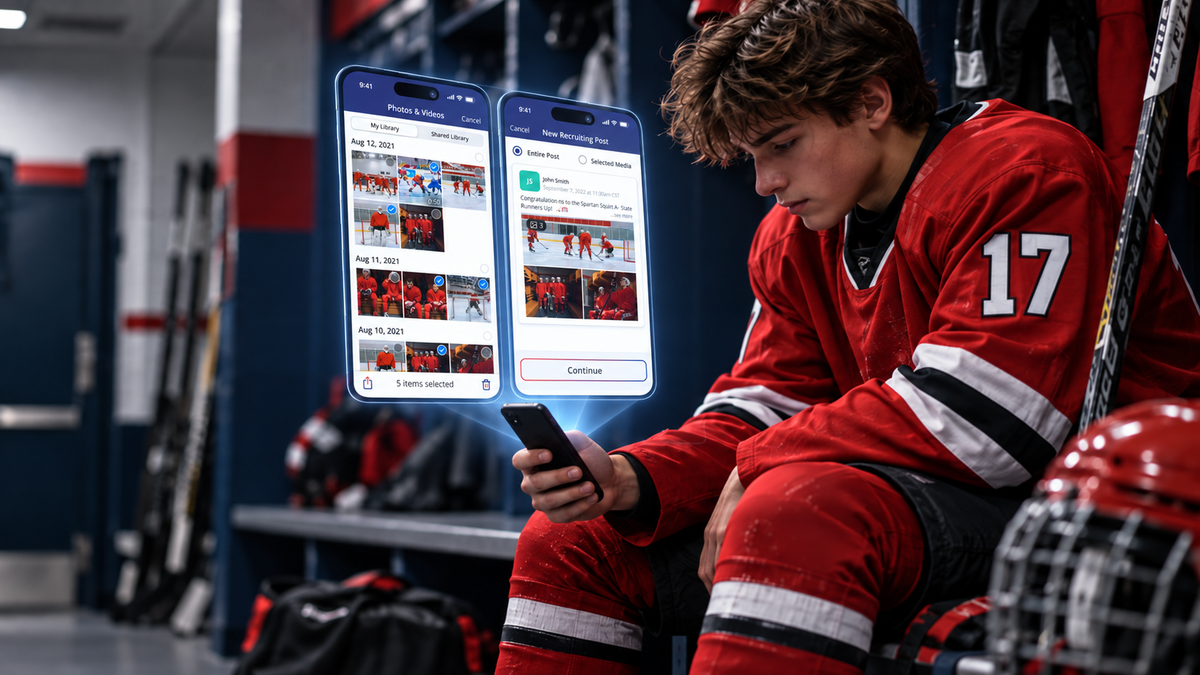
Most platforms treat athlete development as an afterthought — a stats page, maybe a photo gallery. Ask whether the platform gives individual athletes visual feedback tools and, ideally, exposure to a recruiting feed that scouts and recruiters actually see. For families thinking beyond a single season, this matters more than almost anything else on the list.
Pricing: Watch for the Words "Starting At"
"Starting at" pricing almost always means the features you actually want are add-ons. Ask for the total cost with everything included — website, registration, communications, streaming, sponsor management, statistics, fundraising, and accounting — not the entry-level price with six upsells waiting behind it. A platform confident in its value will price by athlete count and include everything at every tier, with no setup fee.
Frequently Asked Questions
What's the biggest mistake organizations make when choosing a sports management platform? Judging platforms by their feature list instead of asking what's excluded. The gap between "all-in-one" marketing and what's actually bundled is where most buyer's remorse comes from.
Should onboarding support be a factor in the decision? Yes — heavily. A platform that migrates your data and builds your website for you removes the single biggest reason organizations delay switching. One that hands you a blank template is asking your staff to do the vendor's job.
Is live stat tracking worth prioritizing over other features? For any organization already paying for a separate video or stats app, yes. Live, in-game stat tracking that auto-generates highlights typically replaces two tools at once.
How do I know if a platform's pricing is genuinely all-inclusive? Ask for the total price with every feature active — not the advertised entry price. If sponsor management, streaming, or statistics cost extra, it isn't truly all-in-one.
Does customer support quality really vary that much between platforms? Significantly. The difference between a dedicated success manager and a general support queue usually shows up exactly when you need help most — mid-season, during a live event, or during onboarding.
The Bottom Line
The platforms worth considering are the ones that hold up under specific questions, not general pitches. Ask about migration, support structure, volunteer automation, live statistics, sponsor tools, and true all-inclusive pricing — and let the answers, not the marketing, make the decision for you.