
Why Sports Organizations Are Leaving Legacy Platforms
Somewhere right now, a league volunteer is squinting at a printed roster, cross-referencing it with a spreadsheet from three seasons ago, while a parent Facebook group argues about whether practice got moved to 5:30 or 6. This is not a hypothetical. This is Tuesday.
For decades, sports organizations have run on a patchwork of tools that were never meant to work together: a registration system from one vendor, a scheduling tool from another, team communication happening in group texts, and financials living in a spreadsheet that only one person on the board knows how to open without breaking it. Everyone calls it "the system." Nobody agrees on what that actually means.
And for a long time, that was just... how it worked. You dealt with it. You printed the extra copy. You sent the reminder email twice because half the parents don't check email anymore. You lived with it because switching felt harder than surviving.
But something has shifted. Organizations that once shrugged off the chaos are now actively walking away from it, and it's worth asking why, because the answer says a lot about where sports organizations are headed next.
The Franken-Stack Problem
Most legacy setups aren't one bad platform. They're five or six mediocre ones, duct-taped together over a decade of "let's just try this app" decisions. Registration lives in one tool. Payments in another. Team chat happens wherever the coach feels like typing that week. Somewhere in there is a spreadsheet nobody wants to touch because if you break the formula, the whole season falls apart.
Each piece works fine on its own. Together, they create a scavenger hunt. Parents don't know where to look for the schedule. Coaches re-enter the same roster into three different systems. Board members spend their volunteer hours doing data entry instead of, you know, running the organization.
This is the quiet tax legacy platforms charge: not a subscription fee, but hours. Hundreds of volunteer hours a season, spent gluing together tools that were never designed to talk to each other.
Members Expect an App, Not an Adventure
Here's the bigger shift: the people showing up to your organization, players, parents, fans, grew up with Uber, DoorDash, and banking apps that just work. They expect to check a schedule, get a push notification, and pay a fee without hunting through email threads or calling someone's cell phone.
When a youth league still runs on paper sign-ups and a phone tree, it doesn't read as charmingly old-school. It reads as a reason to look at the league down the road that has a real app, real-time updates, and a parent portal that doesn't require a PhD to navigate. Member experience has quietly become a competitive advantage, and legacy platforms simply weren't built for it.
Data Shouldn't Live in Silos, or Be Lost
Ask a legacy-platform organization how many players registered five years ago, or which families never renewed, and watch the scramble begin. That information exists somewhere. Probably. In a spreadsheet on a laptop that belonged to a board member who retired in 2022.
Modern organizations are realizing their data is one of their most valuable assets: for fundraising, for growth, for understanding who their community actually is. Legacy systems trap that data in silos or lose it entirely when someone leaves. That's not a small inconvenience. That's an organization flying blind on its own history.
So What Does the Future Actually Look Like?
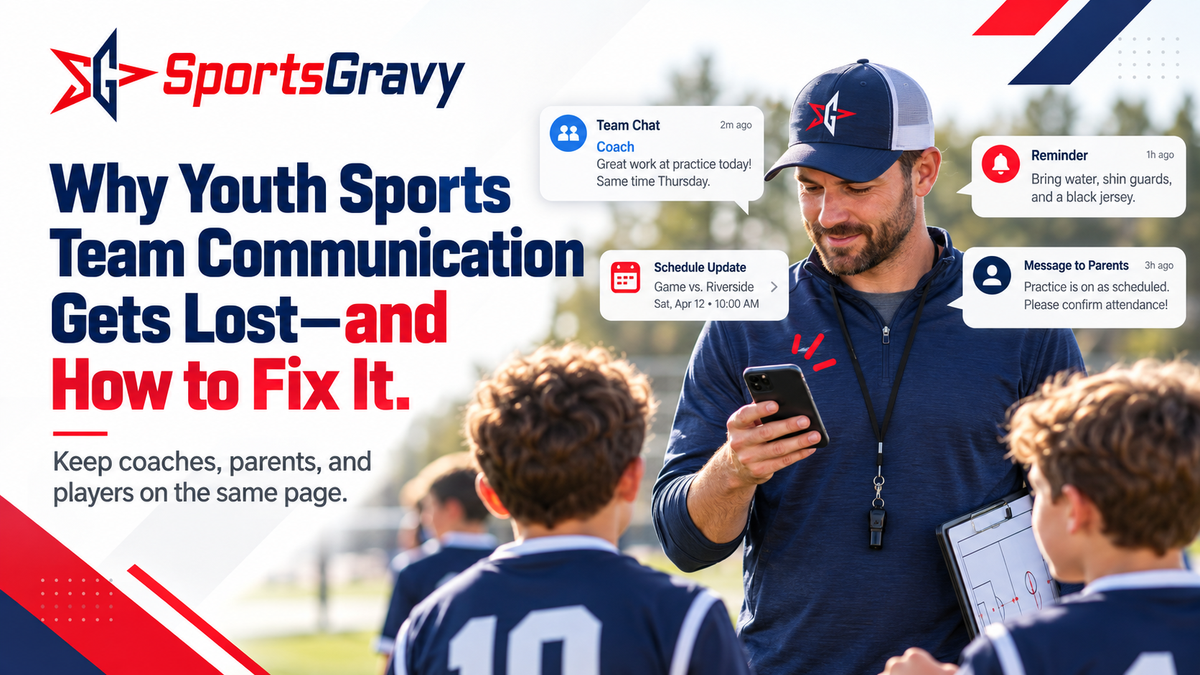
Picture a season where registration, scheduling, payments, communication, and stats live in one place. Where a parent gets a notification the moment practice moves, instead of finding out in the parking lot. Where a coach can message the whole team in ten seconds instead of ten minutes. Where the board can actually see, in real time, how the organization is doing instead of reconstructing it from memory every March.
That's not a far-off vision. That's the standard organizations are increasingly expecting for themselves, and it's exactly the gap SportsGravy was built to close. One platform for registration, scheduling, communication, payments, and community, built specifically for the way sports organizations actually operate, not retrofitted from generic event software.
The organizations making the leap aren't chasing a trend. They're recognizing that the old way costs more than it looks like on the surface, in volunteer burnout, in member frustration, in data nobody can find when it matters most. And once that becomes visible, it's hard to unsee.
So here's the real question worth sitting with: if your organization started from scratch today, with no legacy system to protect and no old habits to defend, would you build it the way it currently runs? If the answer is no, that's not a reason to feel behind. It's a reason to look at what's possible, and start moving toward it.
The future of sports organizations isn't more tools. It's fewer, better ones, working together, built around the people who show up every season to make it all happen. That future is already here for the organizations willing to leave the old system behind. The only question left is when you're ready to join them.